 Service illustration · not a completed customer project
THE WORK, EXPLAINED
Start with the condition.
Understand the scope.
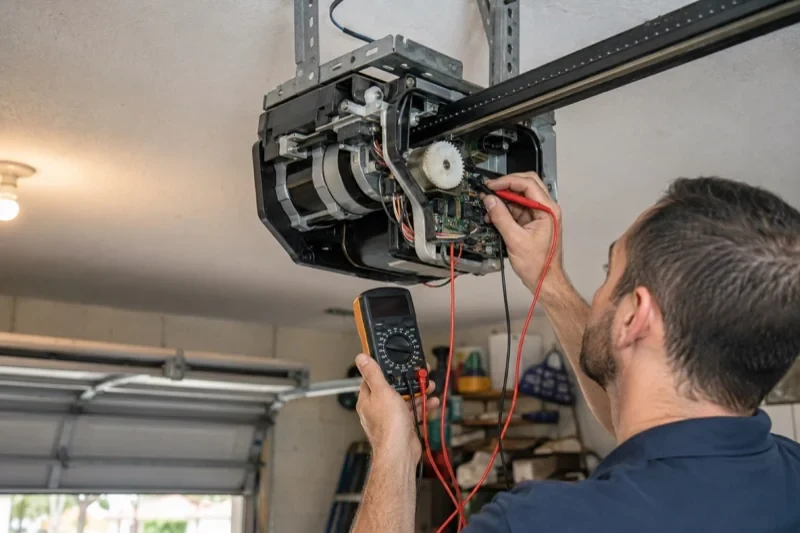
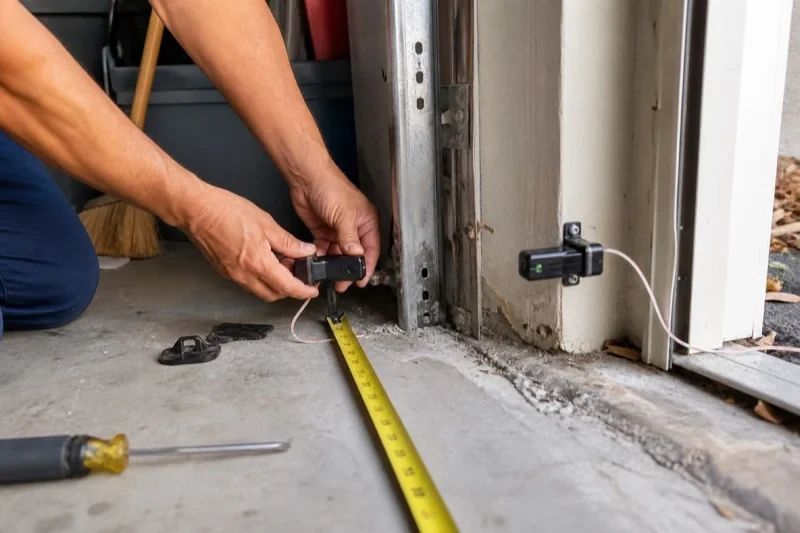
Describe the closing behavior and visible indicator status. Ask the assessment to distinguish obstruction, alignment, wiring and sensor faults before replacement is proposed. Confirm the matched components and the obstruction-detection checks included with the work.
What may be involved
- photo-eye sensors
- low-voltage wire
- mounting brackets
Ask the provider to distinguish existing parts to inspect, proposed replacements, and tools, materials or reports included in the service. Confirm the work and exclusions after assessment; this list does not mean that every item will be supplied or replaced.
LOCAL RESEARCH / Monte Sereno
Local context
The US Consumer Product Safety Commission says garage door openers made or imported for sale in the United States after 1 January 1991 must have reversing systems, and that a requirement for an external entrapment protection system — an electric eye or edge sensor — was added in 1993. Where an electric eye is used, CPSC says it should sit 4 to 6 inches above the floor, and it asks homeowners to check the door and opener every 30 days. Ask which safety checks are part of the visit. This is national safety guidance, not an assessment of your own opener.
Source ↗Area-wide context does not establish the condition of your property or equipment.
Before the visit
If the door is crooked, off track or has a broken spring, keep clear and stop operating it.